IT Strategy & Projects Turning Technology Into Direction
IT Strategy · Technology Projects · Planning · Decision Making
Technology projects rarely fail because someone forgot how to install software.
More often, the difficult questions come much earlier.
Why are we doing this?
What problem are we trying to solve?
What will change after the project?
Who will use the result?
What does success look like?
And perhaps the most important question:
Does this project actually support where the business wants to go?
That is where IT strategy begins.
IT strategy is essentially the process of connecting technology decisions with broader business objectives, while considering infrastructure, security, resources, risks, and modernization.
It sounds simple.
In practice, it is not.
Technology Without Direction
A company can have good technology and still have poor IT.
It can have modern servers.
Fast networks.
Powerful software.
Cloud services.
Security tools.
AI platforms.
And still make bad technology decisions.
Why?
Because technology itself does not provide direction.
Without strategy, organizations tend to accumulate systems.
One application for one department.
Another tool for another team.
A separate database.
A spreadsheet somewhere else.
A new platform because someone heard it was better.
Over time, the environment becomes a collection of decisions rather than an architecture.
Strategy Starts With Questions, Not Products
A healthy IT strategy does not begin with:
“Which technology should we buy?”
It begins with:
“What are we trying to achieve?”
For example:
If the business needs better operational visibility, perhaps the answer is better reporting and data integration.
If the organization is growing, perhaps infrastructure scalability becomes important.
If downtime is becoming expensive, availability and disaster recovery may become priorities.
If security risks are increasing, access control and security architecture may need attention.
The technology comes after the problem.
Not before it.
Every Project Has a Cost Beyond Money
Budget is obviously important.
But the financial cost is only one part of a project.
There is also:
Time
Internal resources
Training
Operational disruption
Maintenance
Security implications
Integration complexity
Future technical debt
Organizational resistance
A project that looks inexpensive on paper may become expensive when all of these factors are considered.
This is why project evaluation should not be limited to the purchase price.
The real question is:
What will this decision cost the organization over time?
The Project Is Not the Finish Line
Another common mistake is measuring success by implementation.
The software was installed.
The system went live.
The project was delivered.
Therefore, success.
But implementation is only a milestone.
The real test comes later.
Are people actually using the system?
Did the process improve?
Did errors decrease?
Did decision-making become easier?
Did the organization become faster or more reliable?
Did the expected business value appear?
A project should therefore be evaluated not only by delivery, but by outcome.
Technology Projects Need Ownership
One of the easiest ways for an IT project to become complicated is unclear ownership.
IT thinks the business owns it.
The business thinks IT owns it.
The vendor thinks everyone agrees.
And eventually nobody is completely sure who makes the final decision.
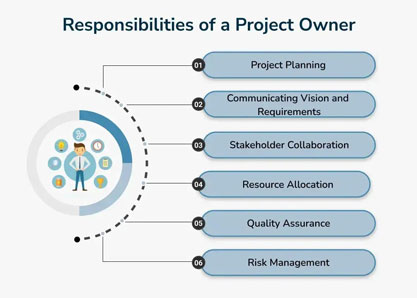
Good projects need clear ownership.
Someone needs to understand the business objective.
Someone needs to manage the technical direction.
Someone needs to make decisions.
Someone needs to communicate with stakeholders.
Someone needs to monitor risks and dependencies.
The exact structure depends on the organization, but the principle is simple:
Responsibility should be visible.
The Space Between IT and Business
This is where many IT projects become difficult.
Technical teams naturally think in terms of systems, architecture, security, performance, compatibility, and implementation.
Business teams naturally think in terms of cost, customers, operations, deadlines, revenue, productivity, and risk.
Neither perspective is wrong.
The challenge is translating between them.
A good IT leader needs to understand both languages.
Not necessarily to become an expert in every business function, but enough to understand why a technical decision matters to the business.
That ability is increasingly important as technology becomes embedded in almost every part of an organization.
Strategy Needs a Roadmap
Strategy without execution is just a document.
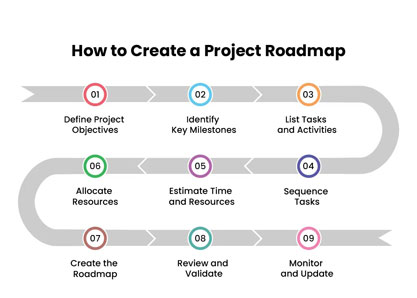
A useful IT strategy should eventually become a roadmap.
Something like:
Where are we now?
↓
Where do we need to be?
↓
What gaps exist?
↓
Which initiatives close those gaps?
↓
What should happen first?
↓
How do we measure progress?
This creates a connection between today’s infrastructure and tomorrow’s organization.
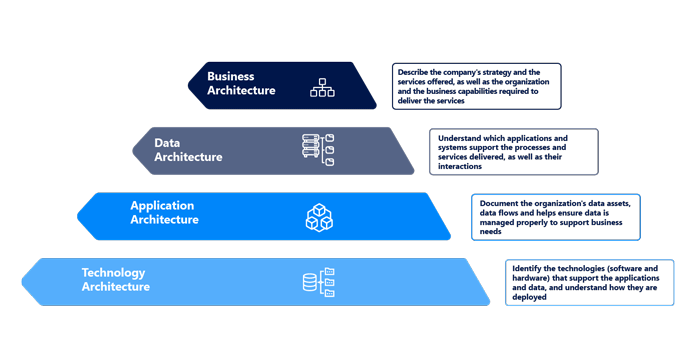
Enterprise architecture approaches make a similar connection by relating business strategy and processes to applications, information systems, and underlying technology.
Not Every Project Deserves to Be Started
This may be one of the most important lessons in IT management.
Starting a project is easy.
Stopping one is much harder.
Sometimes the best IT decision is not to implement something.
Maybe the business benefit is too small.
Maybe the risk is too high.
Maybe another project is more important.
Maybe the existing system can be improved instead.
Maybe the timing is simply wrong.
Good IT management is therefore not about having a long project list.
It is about having the right project list.
Strategic portfolio management similarly focuses on aligning technology initiatives, resources, investment, and business priorities rather than treating projects as isolated activities.
Infrastructure, ERP, Security They Are Not Separate Worlds
One of the biggest shifts in thinking happens when IT stops seeing infrastructure, applications, security, ERP, and projects as completely separate areas.
They are connected.
A new ERP may require infrastructure changes.
Infrastructure changes may create security implications.
Security requirements may influence architecture.
Architecture affects project cost.
Project decisions affect future operations.
The organization is one system.
IT is one ecosystem.
Thinking this way makes technology decisions much more coherent.
The Long-Term Question
A good technology decision should solve today’s problem without unnecessarily creating tomorrow’s problem.
That does not mean predicting the future perfectly.
Nobody can.
It means leaving enough flexibility for the organization to change.
Technology changes.
Business changes.
People change.
Markets change.
A strategy that cannot adapt is not really a strategy.
It is a fixed plan.
Good IT strategy provides direction while leaving room for learning and adjustment.
Technology Is a Means, Not the Destination
Ultimately, IT strategy is not about technology.
It is about direction.
Technology is simply one of the tools available to an organization.
The real value comes when that tool helps the business become more reliable, more efficient, more secure, more informed, or more capable of adapting.
That is why I believe good IT management sits somewhere between technology and business.
You need to understand the systems.
But you also need to understand why they exist.
You need to manage projects.
But you also need to understand what those projects are supposed to change.
And perhaps most importantly, you need to be able to look beyond today’s problems and ask:
What kind of organization are we trying to build next?
That is where IT strategy becomes more than planning.