ERP & Business Systems When IT Starts Speaking the Language of Business
ERP · Business Processes · Enterprise Systems · Digital Transformation
There is a point in every growing organization where technology stops being just a support function.
The company begins to depend on information systems for purchasing, sales, inventory, production, finance, customer service, reporting, and decision-making.
At that point, IT is no longer simply keeping computers and servers running.
It is helping the business run.
This is where ERP and business systems become particularly interesting.
An ERP system connects core business functions and processes, creating a more integrated view of how the organization operates.
But implementing ERP successfully is rarely about installing software.
The difficult part is understanding the business itself.
ERP Is Not Just Software
One of the easiest mistakes in an ERP project is to think of the project as a software implementation.
Install the system.
Configure some modules.
Create users.
Import data.
Train employees.
Go live.
Done.
In reality, that is only the technical surface.
Behind an ERP system are questions such as:
How does purchasing actually work?
Who approves a purchase?
When does inventory change?
Who owns the data?
Where does a sales order become a production requirement?
How does a financial transaction relate to an operational event?
What happens when the real-world process does not match the software?
These are business questions.
And that is why ERP sits somewhere between technology, process, people, and management.
The System Usually Reveals the Process
One of the interesting things about ERP projects is that they often expose problems that existed long before the software arrived.
A process may work when only a few people are involved.
As the organization grows, however, the same process may become dependent on personal knowledge, spreadsheets, emails, or informal approvals.
ERP forces these things into the open.
Suddenly someone has to answer:
Who does what?
When?
Based on which information?
With whose approval?
That can be uncomfortable.
But it is also valuable.
A good ERP project does not simply automate an existing process.
It creates an opportunity to ask whether the process itself makes sense.
Automation Is Not Always Improvement
This is one of the principles I believe is easy to forget.
If a bad process is automated, the organization may simply get a faster bad process.
Technology can make an inefficient workflow faster.
It cannot automatically make the workflow intelligent.
Before automating something, it is worth asking:
Why do we do this in the first place?
Then:
Is there a better way to do it?
And only after that:
How should the system support it?
That sequence can make a significant difference.
The Real Challenge Is Between Departments
ERP systems connect departments that previously had their own perspectives.
Purchasing sees suppliers.
Warehouse sees inventory.
Sales sees customers and orders.
Production sees capacity and materials.
Finance sees money and accounting.
Management sees the organization as a whole.
Each department may be perfectly reasonable from its own perspective.
The problem begins when these perspectives conflict.
ERP creates a common environment where these relationships become visible.
That is why ERP implementation requires more than technical knowledge.
Someone needs to understand the whole process.
Data Is Only Valuable When People Trust It
An ERP system can contain thousands or millions of records.
That does not automatically make the information useful.
Data quality matters.
So does consistency.
So does ownership.
If employees do not trust the data in the system, they will create parallel spreadsheets.
If they create spreadsheets, the organization begins to have multiple versions of reality.
And once there are multiple versions of reality, decision-making becomes difficult.
A successful business system therefore needs more than good software.
People often talk about ERP implementation as a technical project.
But software is usually not the hardest part.
People are.
Employees already have ways of working.
Some are efficient.
Some are inefficient.
Some exist simply because “this is how we’ve always done it.”
Introducing an ERP system changes habits, responsibilities, visibility, and sometimes even the boundaries between departments.
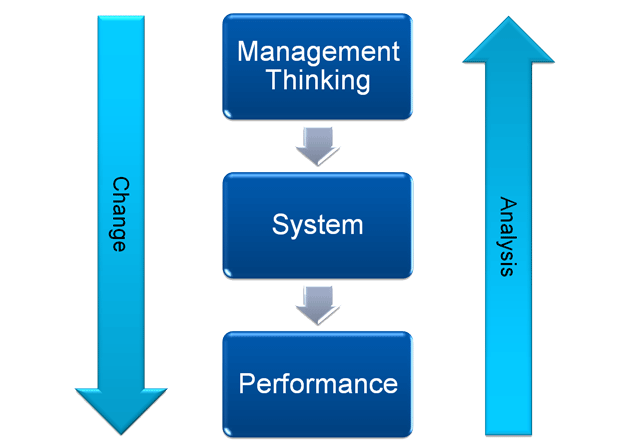
That means ERP implementation is also a change-management project.
Microsoft’s ERP implementation guidance similarly emphasizes that project management, change management, and governance need to work together, with change management addressing the people side of transformation and adoption.
A technically successful ERP that nobody properly adopts is not really a successful ERP.
The Best ERP Is Not the Most Complicated One
There is another trap.
Organizations sometimes believe that a more customized ERP must be a better ERP.
Not necessarily.
Every customization adds something:
A feature.
A dependency.
A maintenance requirement.
A testing requirement.
A future migration concern.
Customization can be necessary.
But it should have a reason.
The goal should not be to make the software perfectly imitate every historical habit of the organization.
The goal should be to create a system that supports the organization better.
ERP as the Company’s Memory
There is another way to look at ERP.
An ERP system is not merely a collection of transactions.
Over time, it becomes part of the organizational memory.
It remembers what was purchased.
What was sold.
What was produced.
What was consumed.
What was paid.
What was delivered.
And, when properly designed, why certain things happened.
That makes ERP extremely valuable.
It also makes ERP extremely sensitive.
Poor process design or poor data quality does not stay isolated.
It can travel through the organization.
A purchasing decision can affect inventory.
Inventory affects production.
Production affects delivery.
Delivery affects sales.
Sales affects finance.
The system connects the dots.
From ERP Operator to Business Systems Thinker
The more I think about ERP, the more I believe the most valuable role is not simply knowing where to click.
It is understanding what happens before the click and after it.
What business event created this transaction?
What information does the next department need?
What decision will eventually depend on this data?
What happens if the process fails?
These questions move ERP work from software support toward business systems thinking.
And that is where ERP becomes much more interesting.
The Goal Is Not a Digital Company
The goal is not to make everything digital.
The goal is to make the organization more understandable, more connected, and more capable of making good decisions.
Technology is the infrastructure.
Processes are the structure.
People are the ones who make the system work.
ERP sits in the middle, connecting all three.
And when these three elements are aligned, an ERP system becomes much more than software.
It becomes part of how the organization thinks and operates.