IT Infrastructure Management Keeping Technology Reliable, Not Just Running
IT Infrastructure · Systems · Reliability · Operations
IT infrastructure is one of those things people usually notice only when something goes wrong.
When the network is slow, users cannot access a critical application, a server suddenly stops responding, or a backup fails when it is needed most, infrastructure becomes visible.
When everything works as expected, nobody really thinks about it.
And, in a way, that is exactly the point.
Good infrastructure management is not about having the most powerful servers, the newest network equipment, or the most sophisticated technology. It is about building an environment that is reliable, understandable, maintainable, secure, and ready for what comes next.
Modern IT infrastructure is a combination of physical and virtual systems, networks, storage, software, security controls, and the operational practices that keep them working together.
But managing all of these components is only part of the story.
The more important question is:
Can the business depend on the technology behind it?
Infrastructure Is More Than Hardware
It is easy to think of infrastructure as a collection of servers, switches, firewalls, storage devices, virtual machines, and cables.
Technically, that is true.
Operationally, it is incomplete.
An infrastructure is a living environment. A change in one part can affect several others.
A DNS configuration can affect authentication.
A firewall rule can affect an application.
A storage problem can become a database problem.
A failed backup can become a business continuity problem.
And a small undocumented change made months ago can turn into a surprisingly difficult troubleshooting session.
This is why infrastructure management should not be reduced to maintenance.
It is about understanding relationships and dependencies.
Reliability Comes Before Complexity
There is a temptation in IT to solve every problem by adding another technology.
A new monitoring platform.
Another security product.
A more complicated virtualization architecture.
Another layer of automation.
Sometimes these are exactly the right decisions.
Sometimes they simply make an already complicated environment harder to understand.
A good infrastructure does not necessarily have more components.
It has clearer architecture.
I would rather work with an environment that is well documented, monitored, backed up, and understood by the people responsible for it than an impressive-looking environment whose dependencies exist only in someone’s memory.
Simplicity is not the absence of technology.
It is the absence of unnecessary complexity.
The Five Questions I Would Ask About Any Infrastructure
When looking at an IT environment, I find five questions particularly useful.
1. Is it reliable?
Can users and business systems depend on it during normal operations?
Reliability is not about never having a failure. Failures happen.
The real question is how often they happen, how severe they are, and how quickly the environment can recover.
2. Is it secure?
Security should not be something added at the end.
Network segmentation, access control, authentication, patching, backups, monitoring, and proper configuration are all parts of infrastructure security.
Security is not a product.
It is a property of the whole environment.
3. Is it recoverable?
A backup that has never been tested is more of an assumption than a recovery strategy.
A serious infrastructure should answer questions such as:
What happens if a server fails?
What happens if storage is corrupted?
What happens if data is deleted?
How quickly can critical services be restored?
Who is responsible for recovery?
Business continuity starts long before the incident happens.
4. Is it observable?
You cannot effectively manage what you cannot see.
Monitoring should provide enough visibility to understand the health of important systems before users become the monitoring system.
CPU, memory, storage, network traffic, service availability, backup status, and important events are only the beginning.
The real value of monitoring is not collecting numbers.
It is turning signals into decisions.
5. Is it understandable?
This one is often underestimated.
Can another experienced IT professional understand how the environment works?
Are IP ranges documented?
Are critical services identified?
Are dependencies known?
Are backup procedures written down?
Are configurations recorded?
If the answer is no, the organization may have infrastructure, but it does not yet have infrastructure knowledge.
Documentation Is Part of Infrastructure
Documentation is sometimes treated as administrative work that can be done “when there is time.”
In reality, documentation is part of the infrastructure itself.
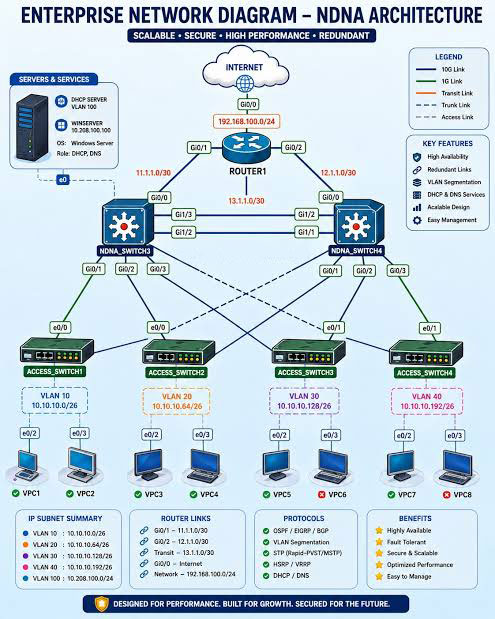
A network diagram is not just a diagram.
A server list is not just a spreadsheet.
A disaster recovery document is not just paperwork.
They are ways of transferring knowledge from one person to the organization.
This becomes especially important as systems grow.
The more an environment depends on individual knowledge, the greater its operational risk becomes.
A healthy IT environment should gradually move from:
“I know how this works.”
to:
“We know how this works.”
That is a significant difference.
Infrastructure Management Is Also Business Management
This is perhaps the most important part.
Infrastructure decisions should ultimately serve the business.
A company does not invest in virtualization because virtualization is interesting.
It invests because it may improve availability, flexibility, resource utilization, recovery, or manageability.
The same applies to networking, security, monitoring, cloud adoption, backup, and almost every other infrastructure decision.
Technology should answer a business need.
Otherwise, it becomes technology for its own sake.
The Infrastructure Nobody Notices
The best infrastructure is often invisible.
Users open their applications.
Files are available.
The ERP works.
The network responds.
Backups complete.
Security controls operate quietly in the background.
Nobody sends an email saying:
“The infrastructure worked perfectly today.”
And that is fine.
Because reliability is often measured by the problems that never become incidents.
The real achievement of infrastructure management is not creating an environment that looks impressive.
It is creating one that the organization can trust.